
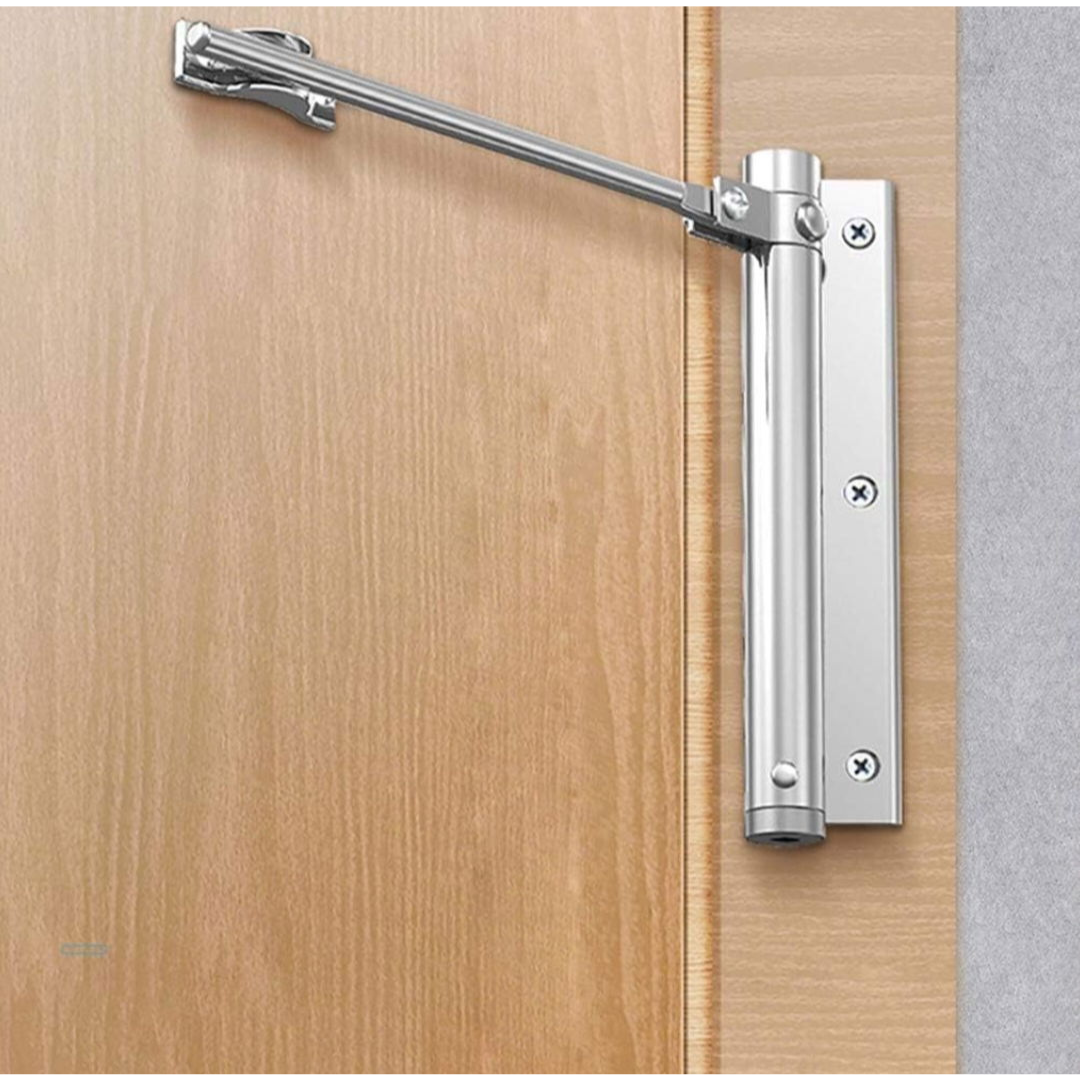
Spring Door Closers are mechanical devices designed to automatically close doors after they have been opened. They use a spring mechanism to control the closing action, ensuring that doors close smoothly, quietly, and securely without requiring manual effort. Spring door closers are ideal for a wide range of applications in both residential and commercial settings. They are commonly used in doors that need to close by themselves, such as those in offices, bathrooms, and entryways, contributing to privacy, security, energy efficiency, and safety.
Key Points about Spring Door Closers
1. Function and Purpose
- Automatic Closing: The primary function of a spring door closer is to ensure that a door automatically closes after being opened. This is particularly useful for maintaining privacy and security, as well as for controlling airflow in a room or building.
- Prevents Doors from Being Left Open: These devices are essential in preventing doors from being left ajar, which can help in energy conservation by keeping HVAC systems functioning efficiently.
- Safety Feature: Spring door closers are commonly used on fire doors to ensure they close immediately after being opened, thereby preventing the spread of fire and smoke.
2. Working Mechanism
- Spring Mechanism: The core mechanism of a spring door closer consists of a wound spring, which is either compressed or tensioned when the door is opened. When the door is released, the energy stored in the spring forces the door to close.
- Adjustability: Many spring door closers feature adjustable tension, allowing the closing force and speed to be fine-tuned based on the door’s weight, size, and the desired closing speed.
3. Types of Spring Door Closers
- Surface-Mounted Closers: These are installed on the surface of the door and door frame. They are the most common type of spring door closers and are relatively easy to install. They are available in both hydraulic and mechanical models.
- Concealed Spring Closers: Installed within the door frame or door itself, these closers are hidden from view for a cleaner, more aesthetically pleasing look. They are often used in high-end or design-sensitive applications.
- Heavy-Duty Closers: These are designed for larger, heavier doors and are typically used in commercial or industrial settings. They can handle the additional force needed to close heavy doors.
4. Benefits of Spring Door Closers
- Improved Security: By ensuring the door closes automatically, a spring door closer prevents doors from being accidentally left open, which can enhance security by making it more difficult for unauthorized access or pests.
- Privacy and Noise Reduction: Automatic closing reduces the risk of doors being left ajar, which can help maintain privacy and reduce unwanted noise in spaces like offices, conference rooms, or homes.
- Energy Efficiency: By ensuring that doors close promptly and seal properly, spring door closers help with temperature control and improve energy efficiency. This is particularly beneficial in areas with controlled climates like offices or laboratories.
- Durability: These devices are durable and require minimal maintenance. Their simple design allows for long-lasting performance, even in high-traffic areas.
- Fire Safety: Spring door closers are essential for fire-rated doors, helping them to close automatically in the event of an emergency. This ensures that the door remains shut to prevent the spread of fire and smoke.
5. Installation and Adjustability
- Easy to Install: Spring door closers are relatively simple to install, especially surface-mounted models. They typically come with installation kits that include screws and instructions for easy setup.
- Adjustable Speed and Force: Most spring door closers offer adjustments for closing speed, latch speed (the final portion of the door’s closing cycle), and closing force. This flexibility ensures compatibility with various door sizes and weights.
- Spring Tension Adjustment: The tension on the spring can usually be adjusted to suit the door’s specific needs. Heavier doors may require more spring tension to close properly, while lighter doors may require less tension.
6. Applications
- Residential Use: Spring door closers are used in homes to automatically close doors, particularly on entry doors, bedroom doors, or bathroom doors. They help maintain privacy, reduce drafts, and enhance security.
- Commercial Use: In office buildings, hotels, hospitals, and schools, spring door closers are widely used on internal and external doors. They are especially important in high-traffic areas, as they help prevent doors from being left open and ensure they remain securely closed.
- Fire Safety: Fire doors often feature spring door closers to automatically close the door in case of a fire, preventing the spread of smoke and flames.
- Industrial and High-Traffic Settings: Heavy-duty spring closers are used on industrial or commercial doors where the risk of doors being left open is high or where security is a priority.
7. Maintenance and Care
- Regular Inspection: While spring door closers are low-maintenance, they should be inspected regularly to ensure they are functioning correctly. Check for any signs of wear or damage to the spring, hinges, or arm.
- Lubrication: Periodically lubricating the moving parts of the door closer can help maintain smooth operation and prevent squeaking or stiffness.
- Adjustments: Ensure the spring tension and closing speed are adjusted as necessary, particularly if the door becomes heavier or lighter or if the closing speed is not to your liking.
8. Considerations When Choosing a Spring Door Closer
- Door Weight and Size: Ensure the spring door closer is rated for the weight and size of the door. Heavier doors will require a closer with stronger springs or a heavier-duty model.
- Environment: Consider the environment where the door closer will be used. In high-traffic commercial settings, a heavy-duty or commercial-grade spring door closer may be necessary.
- Design: Choose a door closer that fits the aesthetic needs of the door and the surrounding decor. Concealed closers may be preferred in high-end residential or commercial properties for a more streamlined appearance.
- Noise Level: Some spring closers operate more quietly than others, which may be an important factor in office or residential settings.


Reviews
There are no reviews yet.