
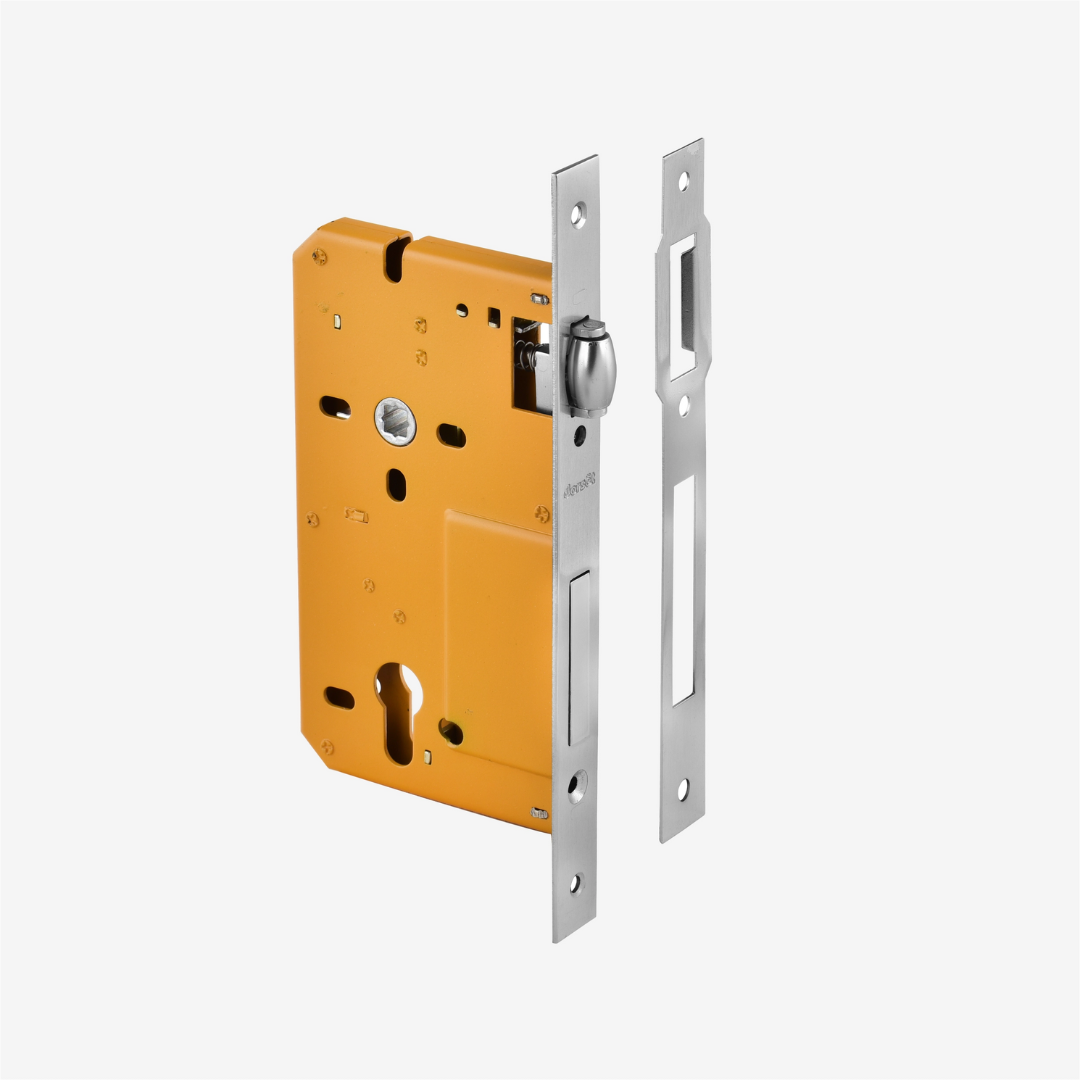
- High-Security Design: Mortise locks are known for their superior security, as they are embedded within the door itself, making them harder to tamper with compared to surface-mounted locks. They provide both a locking mechanism and a latch, and many models also feature an integrated deadbolt for additional security.
- Built-in Pocket (Mortise): Unlike surface-mounted locks, mortise locks require a cavity (mortise) to be cut into the edge of the door. This recessed installation offers a more secure, tamper-resistant fit, as the lock is securely embedded within the door.
- Durability & Strength: Mortise locks are designed to withstand frequent use and offer long-lasting reliability, making them ideal for doors that see high traffic. Their robust construction makes them suitable for both residential and commercial applications, including entry doors, office doors, and gates.
- Complex Mechanism: Typically, a mortise lock includes several components: a deadbolt, a latch, a key-operated lock mechanism, and sometimes a privacy lock (for bedrooms or bathrooms). This multi-functionality makes mortise locks ideal for providing comprehensive security in a single system.
- Versatile Locking Options: Mortise locks offer a wide range of locking options, including key-operated locks, combination locks, and even smart lock versions. Many models can also accommodate different handle or knob styles, allowing for customization based on personal preferences or door aesthetics.
- Enhanced Aesthetics: The recessed installation of mortise locks offers a clean, sleek look, as the lock is hidden inside the door. This makes them a popular choice for high-end residential homes or buildings where appearance and security are equally important.
- Commercial & Residential Applications: Mortise locks are commonly used in both residential and commercial settings due to their robustness and security. They are ideal for doors that require a high level of protection, such as front entry doors, office doors, or external doors.
- Customization & Features: Many mortise locks come with customizable features, such as adjustable backsets, to accommodate different door thicknesses. Additionally, some models include features like anti-drill plates, reinforced strike plates, or keyless entry options for added security.
- Installation Complexity: Installing a mortise lock typically requires professional installation, as it involves cutting a precise mortise pocket into the door. This makes the installation process more complicated compared to simpler, surface-mounted locks.
- Security for Exterior Doors: Mortise locks are particularly suitable for exterior doors, offering enhanced protection against forced entry. The combination of a deadbolt and latch mechanism creates a highly secure locking system that is difficult to bypass.
- Variety of Finishes: Mortise locks are available in a wide variety of finishes, including polished brass, satin nickel, chrome, antique bronze, and matte black. This allows homeowners and business owners to choose a finish that complements their door hardware and interior decor.
- Long-Term Investment: Given their durability, enhanced security, and resistance to wear, mortise locks are considered a long-term investment for anyone seeking robust door security. They typically have a longer lifespan than simpler locking mechanisms.
A mortise lock is a type of lock that is installed into a pocket or cavity (mortise) within the door itself, rather than mounted on the surface. It typically includes a locking mechanism, latch, and often a deadbolt, providing enhanced security for both residential and commercial doors. Mortise locks are known for their durability and strength, making them ideal for high-traffic areas or exterior doors. They offer a higher level of security than surface-mounted locks and are available in a variety of styles and finishes.


Reviews
There are no reviews yet.