
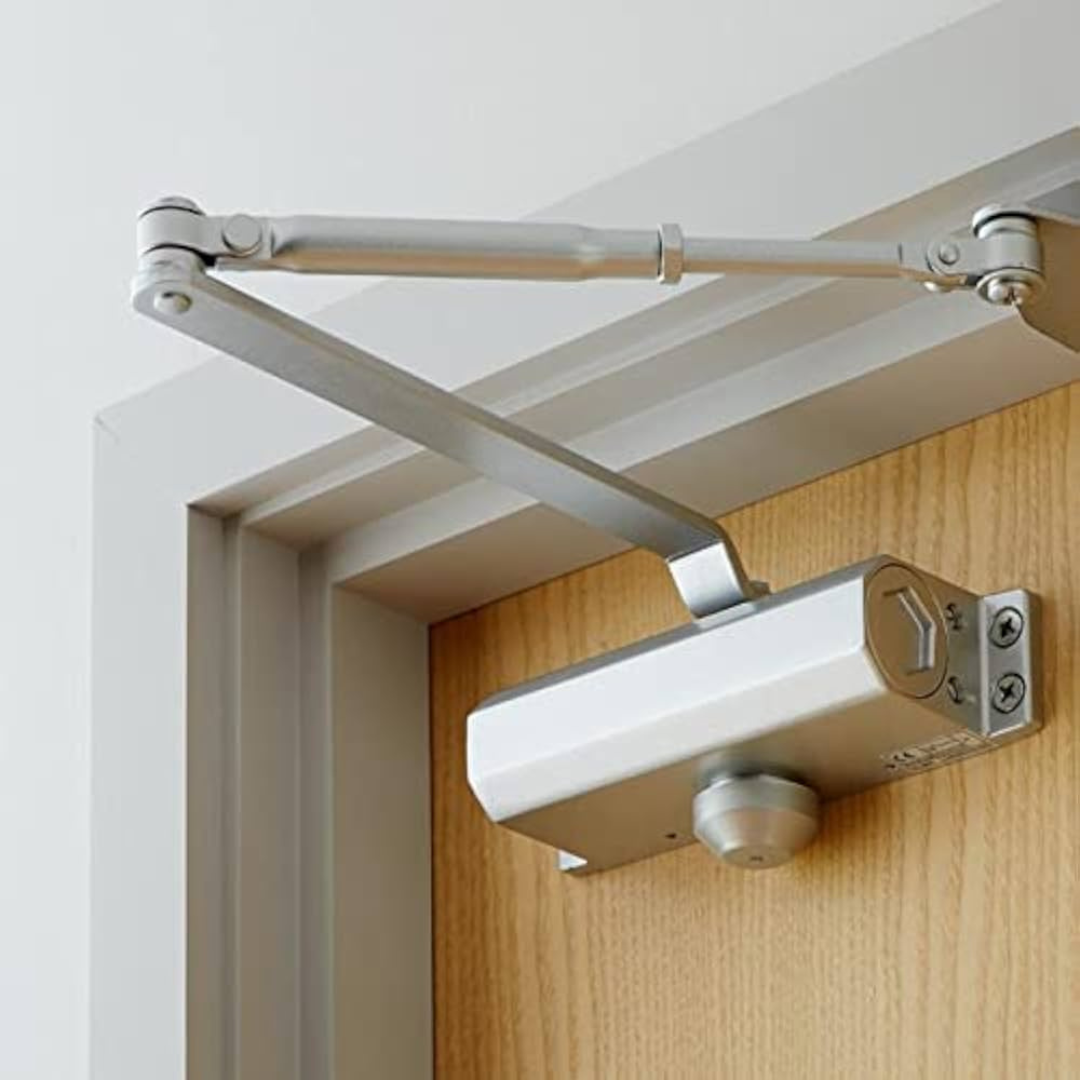
Hydraulic door closers are specialized devices that use fluid pressure to automatically close doors after they have been opened. They offer smooth, controlled closing action, which helps prevent slamming, reduces wear on door hardware, and improves safety and energy efficiency. Hydraulic door closers are widely used in both residential and commercial settings due to their ability to provide precise control over door movement and enhance user experience. These closers are particularly valued for their durability, quiet operation, and ability to regulate door speed, making them ideal for high-traffic areas, fire doors, and doors requiring a soft, secure closure.
Here are the key points regarding hydraulic door closers:
1. What Are Hydraulic Door Closers?
- Function: Hydraulic door closers are mechanical devices that use hydraulic fluid (usually oil) to control the movement of a door as it closes. The fluid inside the closer’s cylinder helps regulate the speed, force, and smoothness of the door’s closing action, ensuring it doesn’t slam shut.
- Key Components: The main components of a hydraulic door closer include the hydraulic cylinder, piston, oil reservoir, and adjusting valves that control the flow of fluid. These components work together to manage the door’s speed and force.
2. How Hydraulic Door Closers Work
- Hydraulic Fluid: The door closer contains hydraulic fluid, which flows through a piston mechanism inside the cylinder. As the door opens, the fluid is forced into a reservoir. Upon closing, the fluid is gradually released back, controlling the speed at which the door closes.
- Adjustable Speed: Hydraulic door closers are typically adjustable, allowing the user to control the closing speed, latch speed (the final part of the door’s closing action), and force. These adjustments ensure that the door operates according to specific needs and door characteristics.
- Soft Closing Action: One of the main advantages of hydraulic door closers is their ability to provide a slow and soft closing action. This reduces the risk of slamming and makes the door’s operation more quiet and smooth.
3. Key Benefits of Hydraulic Door Closers
- Controlled Closing: Hydraulic closers prevent doors from slamming by regulating the speed and force with which they close. This makes them ideal for high-traffic environments and locations where a door needs to be closed securely and smoothly every time.
- Enhanced Durability: These door closers are more durable than mechanical spring closers. The hydraulic system can handle heavier doors and withstand frequent usage without compromising performance, making them a long-lasting option.
- Quiet Operation: Hydraulic closers are known for their silent operation. Unlike mechanical door closers, they don’t create noise during the closing process, making them ideal for noise-sensitive environments like offices, hospitals, or libraries.
- Energy Efficiency: By ensuring that doors close tightly and securely, hydraulic door closers help with energy efficiency by keeping heated or cooled air inside, preventing drafts, and improving the overall energy performance of a building.
- Safety and Security: These closers ensure that doors, especially fire-rated doors, close automatically in the event of an emergency, preventing the spread of smoke or fire. This makes them an essential safety feature in commercial buildings, hospitals, and residential homes.
4. Applications of Hydraulic Door Closers
- Residential Use: Hydraulic door closers are used in homes, particularly on doors that need to be closed softly and securely. They are commonly installed on entry doors, bedroom doors, bathroom doors, and other internal doors that require controlled closing.
- Commercial Use: In commercial buildings, hydraulic door closers are often used on office doors, meeting rooms, hotel rooms, and public restrooms. Their ability to handle high-traffic areas without wear and tear makes them an ideal choice for such environments.
- Fire Doors: Hydraulic door closers are essential for fire-rated doors. These doors must close automatically to maintain the integrity of fire safety systems and prevent smoke and flames from spreading. Hydraulic closers ensure the door is closed quickly and securely in case of fire.
- High-Traffic Areas: Hydraulic closers are ideal for areas with heavy door usage, such as hospitals, schools, airports, shopping centers, and commercial buildings. They can handle frequent operation without compromising performance or lifespan.
5. Types of Hydraulic Door Closers
- Regular Arm Closers: These are the most common type of hydraulic door closers and are installed on the surface of the door and frame. They are visible when the door is closed and are often used in both residential and commercial settings.
- Overhead Closers: These are mounted at the top of the door frame and are less visible, providing a cleaner aesthetic. They are ideal for situations where appearance is important, such as in upscale commercial buildings or modern homes.
- Concealed Closers: These closers are installed within the door or door frame, making them completely hidden from view. They provide a more streamlined and aesthetically pleasing look while offering all the benefits of a hydraulic closer.
- Heavy-Duty Closers: Heavy-duty hydraulic closers are designed to handle larger, heavier doors. These models are often used in industrial, commercial, or high-security applications where additional strength is needed to control the closing mechanism.
6. Adjustability and Customization
- Adjustable Closing Speed: Hydraulic closers can be fine-tuned to ensure the door closes at the desired speed. The closing speed refers to how quickly the door moves from open to closed.
- Latch Speed Adjustment: The latch speed controls the final phase of the door closing action, ensuring the door securely latches without slamming. This is adjustable to ensure the door closes gently but firmly.
- Adjustable Force: The closing force can also be adjusted to accommodate doors of different sizes and weights. Heavier doors may require more force to close, while lighter doors need less force.
7. Maintenance and Care
- Routine Inspection: Hydraulic door closers are generally low maintenance but should be inspected regularly for leaks or signs of wear. If the hydraulic fluid starts leaking, it could cause the closer to malfunction.
- Lubrication: The moving parts of the door closer may require periodic lubrication to keep them functioning smoothly and to prevent wear. Check the manufacturer’s guidelines for maintenance recommendations.
- Cleaning: Regular cleaning of the door closer and surrounding area will help prevent buildup of dirt and debris that can affect performance.
8. Considerations When Choosing a Hydraulic Door Closer
- Door Weight and Size: Ensure the hydraulic door closer is rated for the size and weight of the door. Heavier doors will require a more robust closer.
- Traffic Level: Consider the frequency of use in the area. For high-traffic areas, choose a heavy-duty hydraulic closer that is designed to withstand frequent use.
- Environment: If the door is exposed to harsh conditions (e.g., outdoors, extreme temperatures), choose a closer that is weather-resistant or designed for such environments.
- Aesthetic Preference: Consider whether you prefer a visible or concealed hydraulic closer, depending on the desired look and style of the door and surrounding decor.


Reviews
There are no reviews yet.