
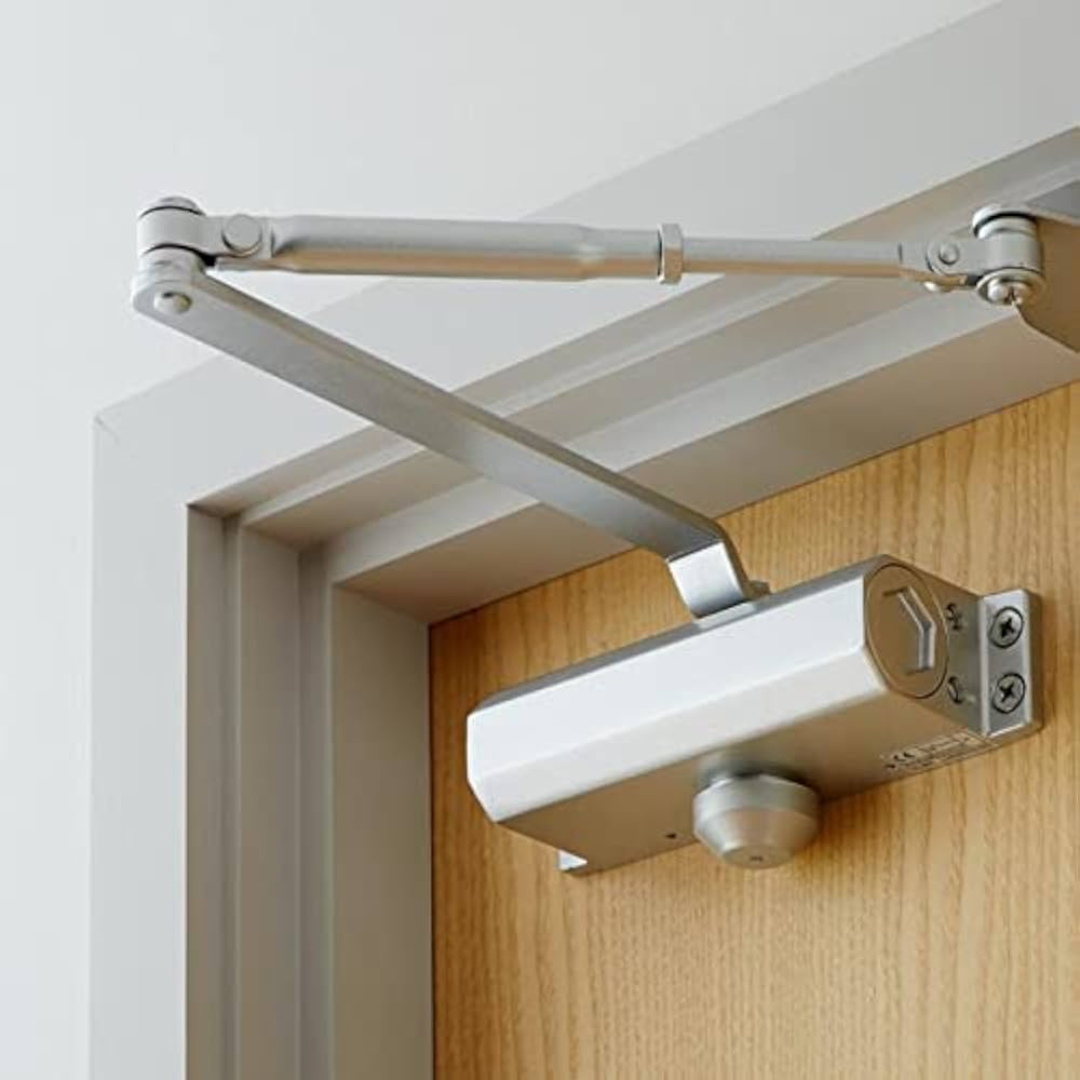
Door closers are mechanical devices used to automatically close doors after they have been opened. These devices are essential for ensuring that doors close securely, preventing drafts, noise, and security risks. They also help maintain privacy and energy efficiency by keeping doors shut and preventing heat or cooling loss. Door closers are commonly used in both residential and commercial settings, with different types designed for various applications, including hydraulic, pneumatic, and spring mechanisms.
Door closers provide an essential function for doors in high-traffic areas, fire-rated doors, and spaces that require controlled door closure, like hospitals, offices, and hotels. They also play a key role in enhancing door longevity, improving building safety, and contributing to overall building performance.
Key Points About Door Closers:
1. What Are Door Closers?
- Function: A door closer is a device that ensures a door automatically closes after being opened. It works by using a mechanism that applies pressure to the door as it closes, allowing it to shut gently and securely.
- Purpose: The primary purpose of a door closer is to prevent a door from slamming, reduce wear and tear on the door and surrounding hardware, and ensure that doors close fully to maintain security, privacy, and temperature control.
2. Types of Door Closers
- Hydraulic Door Closers: These use hydraulic fluid to control the closing speed, force, and smoothness of the door’s movement. Hydraulic door closers are known for their quiet operation and precise control, making them ideal for residential and commercial environments.
- Spring Door Closers: These are the most basic type of door closers, using a spring mechanism to close the door. Spring closers are less expensive but may not offer the same smooth or controlled action as hydraulic closers.
- Pneumatic Door Closers: Pneumatic closers use air pressure to slow down and regulate the closing speed of a door. They are commonly used in lighter-duty applications, offering less precise control than hydraulic models but are still effective in managing door closure.
- Concealed Door Closers: Installed inside the door frame or door itself, concealed closers offer a streamlined and aesthetically pleasing option, especially for doors in high-end commercial or residential settings.
- Overhead Door Closers: These are mounted at the top of the door frame, providing a more discreet solution. Often used in commercial settings, they maintain a clean and organized appearance while still providing strong and reliable door closure action.
3. How Do Door Closers Work?
- Pressure Mechanism: Door closers operate by using a spring, hydraulic fluid, or pneumatic force to create resistance when the door is opened. This force is then used to close the door back to its original position.
- Adjustable Speed and Force: Many door closers offer adjustable settings, allowing users to control the speed at which the door closes and the force of the closing action. This is particularly important for doors in high-traffic areas, fire doors, or places that require a soft closing action.
- Safety Features: Hydraulic and pneumatic closers often have built-in mechanisms that prevent doors from closing too quickly, which can result in damage or injury. These features contribute to the safety of the door’s operation.
4. Benefits of Door Closers
- Safety: Door closers ensure that doors close securely, preventing potential safety hazards. They are often used on fire-rated doors, which need to close automatically to contain the spread of fire and smoke.
- Noise Reduction: Many modern door closers, particularly hydraulic models, are designed to operate quietly, preventing slamming and reducing noise in both residential and commercial spaces.
- Energy Efficiency: Automatic closing helps to maintain temperature control inside buildings by preventing doors from being left open, which can cause energy loss through drafts.
- Increased Privacy and Security: By ensuring that doors close automatically and remain shut, door closers help maintain privacy and security in residential and commercial environments.
- Longer Door Lifespan: Preventing slamming and rough handling of doors helps reduce wear and tear on the door hardware and the door itself, extending its lifespan.
5. Applications of Door Closers
- Residential: In homes, door closers are used on entry doors, bedroom doors, bathroom doors, and other internal doors that benefit from a controlled closing action. They help ensure doors close securely, maintain privacy, and prevent energy loss.
- Commercial: In commercial environments like offices, hotels, hospitals, schools, and shopping centers, door closers help with security, noise reduction, and temperature control. They also ensure that fire doors close automatically in the event of a fire.
- Industrial: In industrial settings, where heavy doors are common, heavy-duty door closers are used to manage large, heavy doors, preventing damage and ensuring safety. These closers often have higher durability and strength to handle frequent and forceful use.
- Fire Doors: Door closers are a critical component of fire-rated doors, ensuring they close automatically and fully. This prevents the spread of smoke or fire and contributes to overall fire safety.
6. Key Features and Adjustments
- Adjustable Closing Speed: Many modern door closers offer adjustable closing speeds, allowing the user to control how fast or slow the door closes. This can prevent doors from slamming, reducing noise and potential damage.
- Adjustable Latch Speed: The latch speed controls the final movement of the door as it closes. It ensures that the door latches fully without slamming into the doorframe.
- Force Adjustment: The force with which a door closes can also be adjusted to accommodate doors of different sizes and weights. Heavier doors require more force to close than lighter doors.
- Backcheck Function: Some door closers come with a backcheck feature, which prevents the door from swinging open too far, helping to protect both the door and the surrounding walls from damage.
7. Installation and Maintenance
- Installation: Door closers are typically installed on the top of the door frame, on the surface of the door, or concealed within the door itself. The installation process involves securing the closer to the door and the frame, and ensuring the door operates smoothly.
- Maintenance: Door closers generally require minimal maintenance but should be regularly checked for signs of wear, leaks (in the case of hydraulic models), and lubrication. Cleaning and tightening any loose parts can prolong the closer’s lifespan.
- Lubrication: For smooth operation, door closers (especially spring and hydraulic models) may require periodic lubrication to prevent rust, reduce friction, and ensure the mechanism works correctly.
8. Considerations When Choosing a Door Closer
- Door Size and Weight: The size and weight of the door play a significant role in choosing the right door closer. Larger and heavier doors require more powerful closers, while lighter doors can use less forceful models.
- Traffic Flow: For high-traffic areas, a heavy-duty closer may be necessary to ensure the door withstands frequent use without malfunctioning. Commercial buildings often need door closers that can handle intense daily traffic.
- Aesthetic Preferences: For aesthetic purposes, concealed or overhead closers may be preferred, as they hide the mechanism for a cleaner, more streamlined appearance.
- Climate and Environment: If the door is exposed to extreme weather conditions, ensure you select a door closer that can handle such environments. For example, models that are weatherproof or resistant to corrosion are important in outdoor or coastal areas.
- Special Features: Look for door closers that include additional features like backcheck, adjustable speed, and automatic hold-open functions for specialized applications, such as fire safety.


Reviews
There are no reviews yet.