
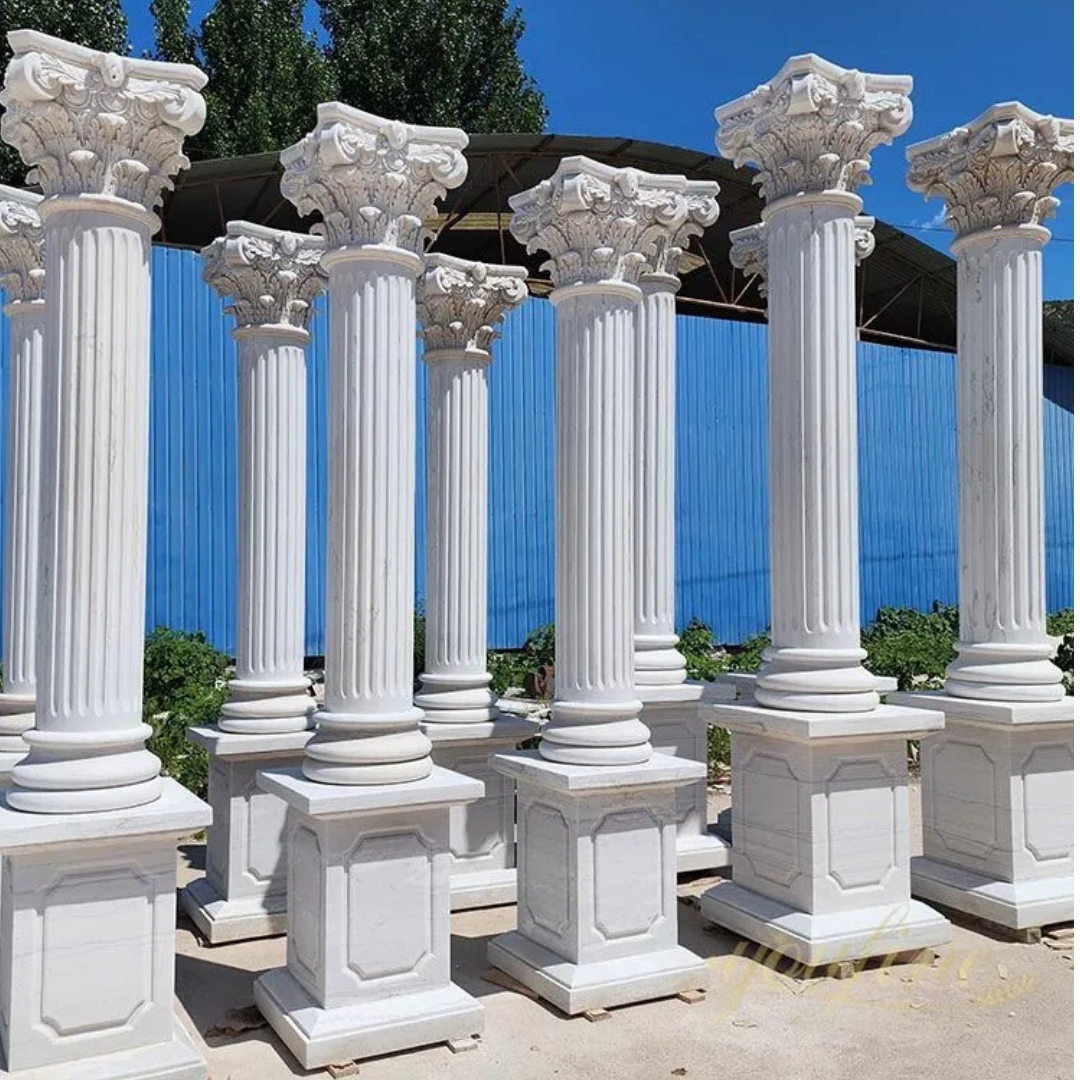
Marble Pillars and Columns are iconic architectural elements that combine functionality, strength, and timeless beauty. Crafted from high-quality marble, these pieces have been used in classical and modern architecture for centuries, known for their elegance, durability, and decorative value. Marble pillars and columns are widely used in homes, temples, palaces, and commercial spaces to provide structural support while adding an aesthetic dimension to the design. Below are the key points that define the charm and significance of marble pillars and columns:
1. Material – Premium Marble
- Strength and Durability: Marble is a naturally strong material, making it ideal for both decorative and load-bearing purposes. Its durability ensures that marble pillars and columns can withstand heavy structural loads while retaining their beauty for generations.
- Elegance and Timelessness: Marble’s smooth texture, luminous finish, and natural veining make it an elegant and sophisticated choice for architectural elements. The timeless beauty of marble adds a sense of luxury and grandeur to any space.
- Variety of Colors and Patterns: Marble comes in a range of colors, from classic white and beige to green, black, and pink, each with unique veining patterns. This allows for customization in design, making marble pillars and columns versatile in matching various architectural themes.
2. Architectural Significance
- Structural Support: Traditionally, pillars and columns were essential in providing support for ceilings, roofs, or upper floors. Marble’s robustness allows these columns to act as strong load-bearers while maintaining an aesthetically pleasing appearance.
- Classical Architecture: Marble pillars and columns are a staple in classical architecture, often seen in ancient Greek, Roman, and Indian temples, as well as palatial structures. Their use evokes a sense of grandeur and historical significance, making them ideal for monumental buildings.
- Modern and Contemporary Uses: While marble pillars and columns are frequently associated with classical styles, they are also used in modern architecture. Today, they can be seen in luxury homes, upscale hotels, and commercial buildings as part of contemporary design, blending traditional beauty with modern functionality.
3. Design and Craftsmanship
- Intricate Carvings and Details: Marble pillars and columns are often finely carved with intricate motifs, patterns, and designs. These carvings can include floral, geometric, or religious themes, reflecting the skill and artistry of traditional stone carvers.
- Fluted or Smooth Finish: Columns may be left with a smooth, polished finish or feature fluted patterns (vertical grooves) for a more textured look. These variations enhance their visual appeal and can be customized based on the desired style.
- Capitals and Bases: The tops (capitals) and bottoms (bases) of marble columns are often elaborately designed. Capitals may feature decorative scrolls or floral motifs, while bases can include classical elements like a round or square plinth, giving the columns a regal and complete appearance.
4. Aesthetic and Decorative Value
- Symbol of Elegance and Grandeur: Marble pillars and columns add a touch of grandeur and sophistication to any space, whether they are used in the entryway of a home, as part of a temple, or as a statement piece in a commercial building. Their presence elevates the overall aesthetic of the environment.
- Timeless Appeal: The combination of marble’s natural beauty and the classical design of pillars and columns ensures they never go out of style. Whether used in traditional or modern settings, these pieces serve as lasting symbols of elegance and refined taste.
- Versatility in Design: Marble pillars and columns can fit a variety of design styles, from ornate and traditional to sleek and minimalistic. They can be used as standalone decorative pieces or integrated into arches, doorways, and as supports in larger structures.
5. Cultural and Religious Significance
- Sacred Symbolism in Temples: In many cultures, especially in Hinduism, marble pillars and columns are seen as symbols of divine strength and beauty. In temples, they often represent structural support for sacred spaces while also serving as divine representations.
- Cultural Heritage: In places like India, marble columns have been used in historical landmarks such as palaces, forts, and temples, standing as symbols of the country’s rich architectural and cultural heritage. These marble columns continue to inspire modern architecture due to their legacy.
- Religious Temples and Monuments: Marble pillars are frequently used in religious settings to create a sense of sacredness and to support intricate temple structures. They are seen as not just physical supports but also as symbols of spiritual strength and reverence.
6. Applications in Modern Architecture
- Entryways and Grand Entrances: Marble pillars and columns are commonly used in the design of grand entryways, gates, and courtyards. They create a sense of awe and grandeur, making them ideal for luxury homes, hotels, and office buildings.
- Interior Design: Inside homes, marble pillars and columns can be used to divide spaces, frame doorways, or as central decorative elements in living rooms, dining areas, or hallways. They provide a regal aesthetic and serve as stunning focal points.
- Outdoor Use: In gardens or outdoor spaces, marble columns can be used as garden ornaments, supporting gazebos, or placed around fountains, adding elegance and structure to landscaped areas.
7. Customization and Personalization
- Bespoke Designs: Marble pillars and columns can be custom-designed according to the architectural style of a building or the personal preferences of the client. From height and diameter to the specific type of marble used, these pieces can be tailored to fit any space.
- Custom Engraving: Some marble pillars and columns feature personalized engravings or inscriptions, such as family names, religious symbols, or historical references, adding a personal touch to the structure.
8. Maintenance and Longevity
- Low Maintenance: While marble requires care to maintain its shine, it is relatively low-maintenance compared to other materials. Periodic cleaning with mild soap and water, along with occasional sealing, can keep the marble looking pristine for years.
- Long-Lasting Investment: The durability of marble ensures that these pillars and columns stand the test of time, making them a worthwhile investment for both aesthetic and structural purposes. Their longevity also means they will continue to add value to the property over time.
9. Sustainability
- Natural Material: Marble is a natural stone that, when sourced responsibly, offers an eco-friendly material choice for architectural elements. The longevity of marble pillars reduces the need for replacements, supporting a more sustainable approach to construction and design.
- Timeless Construction: The enduring quality of marble ensures that these pillars and columns can be enjoyed for generations, making them a sustainable architectural feature that doesn’t require constant upkeep or replacement.
Reviews
There are no reviews yet.